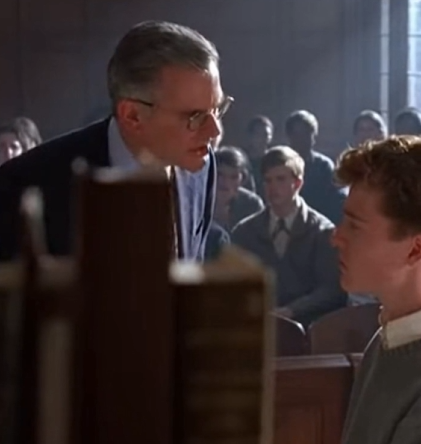
The five-dollar bill was not crisp.
It had been in Grandma Ruth’s wallet for three weeks, tucked behind her library card and a coupon for bread she’d never used. It was soft and warm and shaped by the corner of the wallet into a permanent diagonal crease.
She pressed it into her grandson’s palm on the morning of his tenth birthday.
“Happy birthday, Caleb.”
He looked at it. “Grandma, it’s old.”
“Money doesn’t care if it’s old,” she said. “It still buys things.”
He laughed. He had the kind of laugh that made you feel like you’d done something right just by being in the same room as it — full-body, no restraint. Ruth loved that laugh. She’d been taking small notes on it his whole life, storing them somewhere behind her ribs.
“What are you going to get?” she asked.
Caleb already knew. He’d known for a week.
“Those caramel squares. The ones in the gold wrapper.”
“They’re three-forty-nine.”
“I know. That gives me a dollar and fifty-one cents left over.”
“Math man.” She patted his hand. “Your grandfather was a math man.”
He folded the bill into his front jeans pocket, pressing it flat against his thigh. He was going alone. That was the other gift — the independence of it, the simple, enormous trust of being sent somewhere by yourself for the first time like a person who can be trusted with the world.
He walked to Hollis Convenience Mart on the corner of Grant and Third.
Seven blocks. He counted them.
It was a Tuesday in late September.
The afternoon light was still good — the kind of sideways gold light that made everything look slightly more important than it was. The neighborhood was quiet. A man washing his car in his driveway. Two kids younger than Caleb chasing each other around a parked truck.
Caleb walked with his hands in his pockets, guarding the bill, thinking about the caramel squares.
He’d had them twice before. Once when his teacher gave the class a treat at Christmas, and once when his neighbor Mrs. Patterson left some on the porch. Each time he’d made them last as long as possible, eating one square at a time and folding the wrapper carefully back over the rest.
Today he was going to eat them all at once. Birthday privilege.
He pushed open the door to Hollis Convenience.
The bell above the door worked — a small, bright jingle.
The store was cold inside. The fluorescent lights made everything look washed out, slightly surgical. The aisles were narrow. The floors were the color of old teeth.
Caleb didn’t notice any of that.
He went straight to the candy aisle, third shelf, left side.
Caramel squares. Gold wrappers. $3.49.
He picked up the bag and held it with both hands.
Then he walked to the front counter.
There was one person in line ahead of him — a massive man in a worn leather jacket, standing easy, buying a large black coffee. He paid in exact change, no hurry, the way people move when they’ve done hard things in their life and a Tuesday afternoon register transaction doesn’t register on their scale of difficulty.
Caleb waited behind him, the candy bag in both hands.
The man in the leather jacket took his coffee, glanced down at Caleb — just a glance, brief and warm — and moved to the side to add a lid.
Caleb stepped forward.
He set the candy on the counter.
He pulled the five-dollar bill from his pocket and smoothed it out with both hands before placing it beside the bag.
He looked up.
“Hi,” he said.
The woman behind the counter looked at him.
Her name was Donna Birch. She was forty-four years old. She had worked at Hollis Convenience for six years. She had a commute of eleven minutes and a lunch break of thirty and a manager she’d learned to avoid.
She was not a villain.
That’s important to understand.
She was a person who had accumulated so many small resentments over so many years — the shoplifting teenagers, the rude customers, the low pay, the flickering light in the stockroom that nobody fixed, the general sense that life had promised her something it hadn’t delivered — that she had begun to discharge them indiscriminately.
In ten-year-olds who looked like trouble.
In boys who came in alone.
In that particular kind of suspicion that feels like doing your job until someone explains to you that it isn’t.
She looked at Caleb.
She looked at his jacket.
She looked at the candy on the counter.
She didn’t touch the register.
“Were you at the back of the store?” she asked.
Caleb frowned. “No, ma’am. I came straight to the candy shelf.”
“The display by the window?”
“No. The third shelf. Left side. That’s where these are.” He gestured at the bag on the counter.
Donna’s eyes moved slowly over him. Over his jacket. Over the front pocket.
“Unzip your front pocket,” she said.
Caleb looked down at his jacket. It had one front zippered pocket at chest height.
“Why?”
“Because I’m asking you to.”
“I didn’t take anything. I came straight here. I have my money right here—”
“I didn’t ask about your money.” Her voice came up. Not loud. Just loud enough. “I said unzip the pocket.”
The store had four customers in it at that moment.
A woman with a baby in a carrier, buying milk, two aisles back.
An old man with a cane near the magazine rack.
A teenage girl looking at energy drinks near the cooler.
And the man in the leather jacket, who was standing three feet from the counter, adding a lid to his coffee, who had not moved.
He was watching.
He did not look away.
Caleb’s hands went to his zipper.
He wasn’t going to fight her. He was ten. She was an adult and she was loud and the whole store was quiet now with that particular quiet that feels like being watched through glass. His instinct was to comply, to prove it, to make the discomfort stop.
But his eyes were wet.
He was fighting very hard to keep them from going any further than wet.
His fingers found the zipper.
“You don’t have to do that.”
The voice came from his left.
Caleb turned.
The man in the leather jacket had set his coffee cup down on the edge of the candy rack. Both hands free. He was looking at Donna Birch with an expression that was entirely calm and entirely serious at the same time — the way a level surface is both flat and precise.
“He doesn’t have to show you anything,” the man said.
Donna stiffened. “Sir, this doesn’t involve you.”
“I’m in the store.” His voice was level. Not aggressive. Just — there. Immovable. “I’ve been in the store since before this boy walked in. I watched him come through the door, go to the candy shelf, pick up that one bag, and walk straight here.”
He paused.
“So yeah. This involves me.”
Donna’s chin came up.
There’s a specific kind of person who responds to being challenged by doubling down, because backing off feels like losing, and losing is the thing they have been most afraid of for a very long time.
“I’ve had a lot of kids stealing from this store,” she said. “Kids his age. Just last week—”
“He’s not last week’s kid,” the man said. “He’s this week’s kid. This specific kid. Right here. Right now.”
He looked at Caleb.
“What’s your name, son?”
Caleb swallowed. “Caleb.”
“You come in here a lot, Caleb?”
“No sir. It’s my birthday.” His voice was steadying slightly — the way a compass needle steadies once it finds north. “My grandma gave me money to buy these.”
The man looked back at Donna.
“Birthday money,” he said. “To buy candy. And you’re making him unzip his jacket.”
Donna opened her mouth.
A woman’s voice from behind them said, “I saw the whole thing too.”
The woman with the baby in the carrier had come to the end of the aisle. She was in her thirties, a grocery basket on one arm, her baby asleep against her chest. Her face was composed and slightly tired in the way of mothers who have used up their patience on harder things than this.
“He walked straight to the candy shelf,” she said. “I watched him. He went right there and right here.”
Donna looked at her.
Then at the man in the leather jacket.
Then at Caleb, who was ten years old and holding a bag of caramel squares and standing very still with his hands at his sides and his eyes bright with the effort of not crying in a convenience store on his birthday.
“I just wanted to buy candy,” Caleb said.
He wasn’t performing it. He wasn’t working it for sympathy. He was just saying the true thing, quietly, because it was the only thing he had.
The silence in the store was complete.
The old man by the magazine rack had turned fully to face the counter.
The teenage girl by the cooler had let the glass door fall shut without taking anything.
Donna Birch stood behind her register and looked at a ten-year-old boy and a man in a leather jacket and a tired woman with a baby.
And somewhere in the circuitry of her, something shorted.
Not immediately. Not cleanly.
But it shorted.
She reached for the register.
She rang up the caramel squares.
“Three forty-nine,” she said.
Her voice was flat. Small. A voice that had run out of room.
Caleb stepped forward and handed over the five.
His hands weren’t shaking anymore.
The register opened. Donna counted out a dollar and fifty-one cents in change.
She set it on the counter — not in his hand. On the counter.
Caleb picked it up. He picked up the candy.
He looked at the man in the leather jacket.
The man gave him a single nod. The kind of nod that means you’re good, kid. You held it together.
Caleb nodded back.
He walked toward the door.
He stopped before he got there.
He turned around.
He looked at Donna Birch.
“My grandma said I should always be polite,” he said. “So. Thank you.”
And he walked out of the store.
The bell above the door jingled.
The man in the leather jacket’s name was Dale Pruitt.
He was fifty-two years old. He’d spent twenty-two years as a long-haul trucker, which is a profession that teaches you two things above all else: patience and the importance of paying attention to what’s actually in front of you.
He’d come into Hollis Convenience that afternoon to buy coffee and a road atlas, because he preferred paper maps to phone GPS on principle.
He’d watched Caleb walk in.
He’d watched the whole thing.
He picked up his coffee from the edge of the candy rack and turned to face Donna Birch.
“You got cameras in here?” he asked.
Donna blinked. “That’s — yes. Standard security.”
“You know it records everything.”
“Yes.”
“Including that.”
He didn’t gesture. He didn’t need to. They both knew what that referred to.
Donna looked at the counter.
“I’m just doing my job,” she said. The words came out smaller than she wanted.
“Your job,” Dale said, “is to ring up customers. Not to accuse a ten-year-old kid of stealing in front of a store full of people because he made you nervous.”
He said it without venom. Without cruelty. Just with the directness of someone who has sat with something long enough to know exactly what it is.
“That child was doing nothing wrong.”
“I didn’t — I wasn’t trying to—”
“I know,” Dale said.
The word landed differently than she expected. Not absolution. Not condemnation. Just acknowledgment.
“But you did it anyway.”
He picked up the road atlas from the rack beside the register.
He set it on the counter.
“I’ll take this too,” he said. “And you should probably let your manager know what the camera’s got. Before someone else does.”
He paid.
He left.
The woman with the baby’s name was April Connelly.
She had been in the store to buy milk and had stayed longer than she intended.
She stood in the parking lot afterward, baby still against her chest, phone in her hand.
She’d pulled up the Hollis Corporate customer feedback line.
She typed carefully, because her daughter was sleeping and she didn’t want to wake her, but she wanted to get everything right.
My name is April Connelly. I was in your Grant and Third location this afternoon, approximately 3:15 PM. I witnessed your employee — a woman, mid-forties, brown hair, apron — verbally accuse a child of approximately ten years of shoplifting without any observable cause. The child had not been near any merchandise except the item he brought to the counter to purchase. He was there with birthday money to buy candy. She demanded he unzip his jacket in front of other customers. He became visibly distressed. Another customer and I both observed the entire incident. Your store has security cameras and I would encourage you to review the footage from this afternoon. This is not acceptable treatment of a child or any customer. I would like to speak with a district manager.
She hit send.
Her daughter shifted against her chest.
“It’s okay, baby,” April said. “We’re going.”
She walked to her car.
Gerald Stein managed four stores for the Hollis chain. He was the kind of manager who read every customer feedback submission personally, partly because his own district manager required it and partly because he genuinely believed that the gap between a good store and a bad one was usually explained by three or four recurring complaints.
He read April Connelly’s message at 5:47 PM while eating a sandwich at his desk.
He read it twice.
Then he called the Grant and Third location.
Donna picked up.
“Ms. Birch,” he said. “I just received a complaint from a customer at your location this afternoon. About an incident with a child.”
Silence.
“Tell me about it,” Gerald said.
Donna told him.
She told him the version where she was doing her job, where there had been shoplifting lately, where you can’t be too careful, where she couldn’t have known.
Gerald listened to all of it.
“Have you reviewed the footage?” he asked.
“No.”
“I have,” Gerald said.
That was a lie. He hadn’t reviewed it yet. But the pause that followed was very informative.
“I want you to come in tomorrow morning at nine,” he said. “We’ll sit down together and go through it.”
“Gerald, I—”
“Nine AM, Donna. That’s all for now.”
He hung up.
He called his security vendor and requested the footage.
Then he finished his sandwich, though it tasted worse than it had before.
Dale Pruitt drove north out of town at 6 PM.
He had a load to pick up in the morning, 400 miles away. He liked to drive at dusk when the light was good and the highway was quiet.
He spread the road atlas on the passenger seat and traced the route with his finger before pulling out of the parking lot.
His phone buzzed in the cupholder.
Unknown number. He ignored it.
It buzzed again.
He picked it up.
“Dale Pruitt?” A woman’s voice. Young.
“Yeah.”
“My name is Jennifer Marsh. I’m a reporter with the Kingfield Courier. A customer reported an incident at Hollis Convenience on Grant and Third this afternoon. She mentioned a man in a leather jacket who intervened on behalf of a child. Is that you?”
Dale was quiet for a moment.
“How’d you get my number?”
“Another customer,” the reporter said. “She saw you pay with a card and called the store and — you know, small town.”
“Small town,” Dale agreed.
“Would you be willing to comment on what happened?”
Dale thought about Caleb. About the way the kid had turned around at the door and said thank you with the polite solemnity of a person who’d been raised right.
“Not really,” Dale said. “The kid handled it. I just stood there.”
“Still—”
“You should ask the kid,” Dale said. “He’s the one who went through it.”
He set the phone down.
He pulled out of the parking lot.
He drove north, through the long September dusk, with the road atlas on the seat beside him and the radio on low.
Grandma Ruth was sitting on her porch when Caleb came home.
She was doing what she usually did in the evenings — a crossword, a glass of iced tea, the slow monitoring of who came and went on the block.
She saw Caleb from half a block away. She watched his walk.
Something had happened.
He was okay — she could see that. His step was fine, his head was up. But there was something settled in him that hadn’t been there this morning. A weight, carried and managed.
She didn’t ask immediately.
She let him sit down next to her. She let him open the bag of caramel squares and eat one slowly, the way he always did, making them last.
“How was the store?” she asked.
He told her.
All of it. The cashier, the accusation, the man in the leather jacket, what he’d said to Donna on the way out.
Ruth listened without interrupting.
When he finished, she was quiet for a moment.
“How do you feel?” she asked.
Caleb thought about it.
“Okay,” he said. “Better. After I said thank you — that was weird, but it felt right.”
“Why?”
“Because she was wrong,” Caleb said. “But she’s still a person. And I didn’t want to leave angry.”
Ruth looked at her grandson for a long time.
“Who taught you that?” she asked.
Caleb looked at her.
“You did,” he said.
She reached over and took his hand in both of hers.
They sat on the porch until the sun was gone.
Donna Birch arrived at Gerald Stein’s office at nine-oh-three the next morning.
He had the footage on his laptop. He turned it to face her without preamble.
She watched herself lean over the counter.
She watched the boy — ten years old, birthday money — flinch backward.
She watched his hands start to move toward his zipper.
She watched the man in the leather jacket step forward.
She watched herself, from above, from the cold indifferent angle of a security camera, do the whole thing.
It looked different from up here.
It looked like exactly what it was.
“Donna,” Gerald said. “I’ve worked with you for four years.”
She nodded.
“I don’t think you’re a bad person.”
She looked at her hands on the table.
“But I can’t have this. I’ve had two other complaints this quarter — two. Both involving young male customers.” He closed the laptop. “I’m going to need your badge today.”
Donna looked up.
“Gerald—”
“I’m sorry,” he said, and he meant it. “This was a mistake that had to have consequences. You understand that, right?”
She was quiet for a long time.
Outside Gerald’s window, the parking lot of a grocery store was filling up. People with carts. A woman lifting a child out of a car seat. An ordinary Tuesday morning.
“Yeah,” Donna said finally.
She unpinned her badge.
She set it on the table between them.
She didn’t cry. She was past the age of crying in managers’ offices. But there was something in the room — heavy and old, the weight of a thing that can’t be undone.
“I’ve been tired,” she said. It wasn’t an excuse. It was a statement of fact. A small, incomplete explanation of how you become a person who makes a ten-year-old cry in a store on his birthday.
“I know,” Gerald said.
He walked her out.
The Kingfield Courier ran the story on Thursday.
It wasn’t front page. Small town papers don’t always lead with human interest. But it was page three, with a photo of the inside of the store — no people, just the counter, the fluorescent lights, the candy shelf.
The headline was: Local Child Falsely Accused at Convenience Store: Community Responds.
Jennifer Marsh had tracked down Caleb through his school (with permission from Ruth, who had very specific feelings about this entire situation and wanted them on record).
The article quoted April Connelly. It quoted Gerald Stein, who gave a brief statement about the store’s commitment to respectful treatment of all customers and confirmed that “appropriate action had been taken.”
It did not name Donna Birch. Jennifer Marsh had made that choice deliberately — the story was about Caleb, not about destroying someone who had already lost her job.
It did not find Dale Pruitt.
Dale was 400 miles away by then, picking up a load in a warehouse outside of Columbus.
He read the article on his phone during his break.
He put the phone back in his pocket.
He drank his coffee.
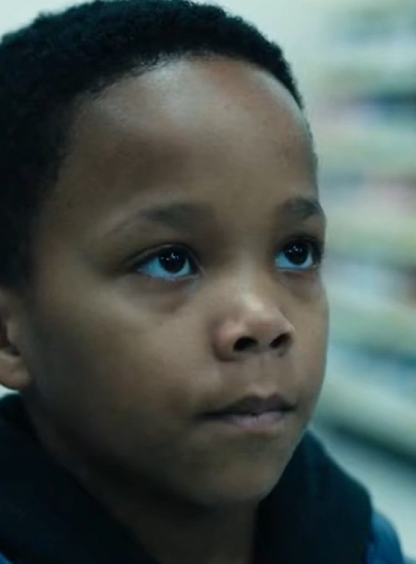
Three weeks after the incident, Ruth Hollis (Caleb’s grandmother) mailed a letter to the Kingfield Courier.
She wrote it by hand, on her good stationery.
Dear Editor,
My grandson Caleb is ten years old and was falsely accused of shoplifting at your local Hollis Convenience Mart on his birthday in September. You wrote about this, and I want to add something your article did not include.
There was a man in that store who stood up for my grandson. He was a stranger. He didn’t know Caleb and he didn’t have to say anything, and he said something anyway. He was calm and he was kind and he made a frightened child feel like the world was not entirely against him.
I don’t know this man’s name. He left before I could thank him.
I want him to know, if he ever reads this: my grandson told me about you. He said you nodded at him on the way out. He said it felt like being told he was okay.
He is okay. He is very okay. He ate his whole birthday candy in one sitting, which I had told him not to do and which I completely understand.
Thank you for raising your voice for a child who was not yours to protect. That is a rare thing in this world.
With gratitude,
Ruth Hollis
The Courier printed it in the letters section the following week.
It was shared online 847 times.
Dale Pruitt did not see it. He was somewhere in Nebraska.
But a friend of his did. She texted him a screenshot with the message: Is this you??
He looked at the screenshot for a long time.
He typed back: Tell her the kid was easy to stand up for.
His friend replied: I’m going to cry.
Dale replied: Don’t. It was nothing.
Then he put his phone away, started his engine, and drove west into a sun that was still good.
On the Saturday after the article ran, Caleb went back to Hollis Convenience on Grant and Third.
Not because he needed anything.
He went because his grandmother said that the best way to not let something bad live in a place forever was to make a good memory there.
There was a different cashier at the register — a young woman, maybe twenty, with paint on her knuckles and headphones around her neck.
She smiled at Caleb when he walked in.
“Hey! What can I get you?”
Caleb picked out a bag of caramel squares.
He brought them to the counter.
He put down exact change — three dollars and forty-nine cents, counted out that morning from his money jar with careful precision.
“Thanks,” he said.
“Happy shopping,” she said, and smiled again, because she was new and still liked people.
Caleb walked home in the October afternoon, eating caramel squares one at a time, folding the wrapper carefully back each time.
The sun was doing that sideways-gold thing again.
It made everything look slightly more important than it was.
He ate the last square on the porch steps.
He licked his fingers.
He thought about the man in the leather jacket — how he’d just been standing there, buying coffee, doing nothing special. How he’d watched, and then spoken. How simple it had been, from the outside. How enormous it had felt from the inside.
He thought: I want to be like that.
Not loud. Not dramatic.
Just: I know you didn’t.
Three words.
That’s all it takes, sometimes.
Three words and the willingness to say them.
THE END