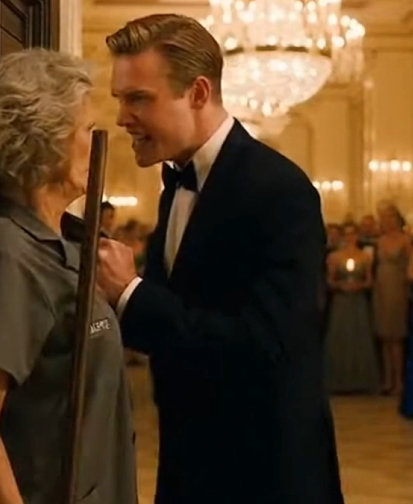
The dinner rush at Beaumont’s was winding down when the trouble walked in.
Lily Marsh noticed him the second he stepped through the door. Something about the way he moved—sharp, aggressive, like the world owed him a debt. He was big, probably six-two, with a thick neck and hands like slabs of meat. He sat at table nine without waiting to be seated and snapped his fingers at the hostess.
“Seat’s taken care of. Get me a bourbon. Neat.”
Hannah, the hostess, shot Lily a look that said your problem. Lily sighed. Table nine was her section.
She was twenty-two years old, and some days she felt forty. Her parents had died in a car wreck when she was eighteen, leaving her with a mortgage she couldn’t afford, a savings account with eleven dollars in it, and a fourteen-year-old brother named Caleb who still had nightmares about the phone call.
She’d dropped out of college to work full-time. Two jobs. Beaumont’s at night, the dry cleaner’s in the morning. Sleep was a rumor. Hope was a luxury.
“Coming right up,” she said, and meant it.
The man’s name was Dean Roark, though she wouldn’t learn that until later, when his mugshot appeared on the evening news. For now, he was just Table Nine—loud, rude, and getting worse with every glass.
He sent the bourbon back. “Tastes like bathwater.”
She brought another. He drank it in one swallow and didn’t say thank you.
He sent his steak back. “I said medium rare. This looks like shoe leather.”
The kitchen remade it. She carried it out with a fresh smile.
He stabbed the steak with his fork, inspected it like a surgeon, and shoved the plate away. “Forget it. Just bring me another drink.”
“Of course, sir.”
Lily retreated to the service station and exhaled. Marco, the bartender, raised an eyebrow.
“Table nine?”
“Table nine.”
“Want me to flag the manager?”
Lily shook her head. Richard, the manager, had a policy about confronting customers: don’t. His philosophy was that tips solved everything and complaints solved nothing. Lily was on her own.
She loaded a tray with fresh drinks—three whiskey sours for table seven, a sparkling water for table twelve, and another bourbon neat for the devil at table nine—and headed back out.
The dining room was warm, golden, full of soft conversation and the clink of silverware. Beaumont’s was the kind of place where people came to celebrate—anniversaries, promotions, birthdays. Tonight, there must have been fifty or sixty people scattered across the tables and booths. Couples. Families. A group of businessmen laughing too loud in the corner.
Lily wove between the tables with practiced grace. She dropped the whiskey sours at table seven—”Enjoy, folks”—and the sparkling water at twelve—”Here you go, Mrs. Patterson”—and then turned toward table nine.
She could feel the tension radiating off Dean Roark like heat off asphalt. His knee was bouncing. His jaw was clenched so tight the muscles in his cheeks twitched.
She stopped at his table and set the bourbon down gently.
“Here you are, sir. Can I get you anything else this evening?”
Dean looked at the glass, then at her. His eyes were glassy, unfocused, and full of something she recognized instantly—she’d seen it in foster homes, in parking lots, in the faces of men who used their size as a weapon.
Rage.
“What did you just say to me?” he hissed.
“I—I just asked if you needed anything—”
“You think you can talk to me like that?”
Her heart dropped into her stomach. “Sir, I’m sorry if I—”
He stood up so fast that the chair behind him flew back and crashed into the table behind, knocking over a vase of flowers with a sharp crack. The couple at that table gasped and pressed back into their seats.
“I’m sick of your attitude,” he said, and his voice was a growl—low, dangerous, and completely unhinged.
“Sir, please—”
His hands shot out and caught her by both shoulders.
He pushed.
The force was staggering. She weighed maybe a hundred and twenty pounds, and he pushed her like she weighed nothing at all. Her feet left the ground. Her arms windmilled. The tray clattered somewhere behind her.
She hit the glass cocktail table spine-first.
The explosion was colossal.
The table—a thick piece of tempered glass on a chrome frame—shattered beneath her, breaking into a thousand jagged fragments that sprayed across the floor in every direction. The sound was like a bomb going off in a library. It stopped every conversation, every fork, every breath.
Lily lay on her back in the wreckage. Glass was everywhere—in her hair, embedded in the back of her uniform, scattered around her in a glittering halo of destruction. Her ears were ringing. Her back screamed with pain.
Then she felt the heat on her wrist.
She looked down and saw blood.
A shard of glass had opened a deep, jagged gash across the inside of her left wrist. Blood was flowing fast—too fast—pooling on the white tile in a spreading crimson stain.
She grabbed her wrist with her right hand and squeezed, but the blood seeped through her fingers.
“Help,” she whispered.
She looked up at the dining room. Fifty, sixty people. Parents, couples, professionals. People who drove nice cars and read books about empathy.
Not a single person moved.
“Help me,” she said again, louder this time, her voice cracking.
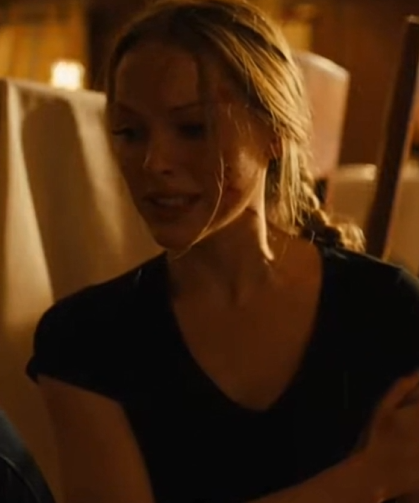
Nothing. They sat frozen in their seats like department-store mannequins, their faces locked in expressions of horror and paralysis. A woman covered her mouth. A man looked at his plate. A teenager held up his phone, recording.
Dean Roark stood over Lily like a predator over a kill. His chest was heaving. His face was red, veins popping in his neck. He turned slowly, looking at the crowd, and what Lily saw on his face wasn’t regret—it was satisfaction.
“No heroes tonight,” he said. His voice carried across the silent restaurant like a judge reading a verdict. “That’s what I thought.”
He kicked a piece of glass away from his shoe and looked down at her.
“Maybe next time you’ll watch your mouth.”
Lily pressed her wrist harder. The blood wouldn’t stop. She could feel herself getting dizzy. The overhead lights were starting to blur.
Caleb, she thought. Who’s going to take care of Caleb?
She heard a sound. At first she thought it was the ringing in her ears playing tricks, but then she heard it again—the heavy wooden front door of Beaumont’s opening and closing.
Footsteps. Steady. Unhurried.
She turned her head and saw him.
He was tall—maybe six-one, six-two—and lean, with the kind of build that suggested discipline rather than bulk. He wore a dark charcoal suit that fit like it had been sewn onto him, with a white shirt underneath, no tie, the collar open. His shoes were black, polished to a mirror shine. His face was composed, angular, with sharp gray eyes that seemed to take in the entire room in a single sweep.
Behind him stood another man—broader, thicker, with a shaved head and the unmistakable posture of someone trained to protect. A bodyguard.
The man in the suit stopped just inside the door. His eyes moved: the broken glass. The blood. The girl on the floor. The man standing over her. The frozen crowd.
He didn’t ask questions. He didn’t announce himself. He just walked forward.
His shoes crunched on broken glass, but he didn’t slow down. He moved through the restaurant like everyone else had been edited out of the picture—past the silent couples, past the businessmen, past the kid with the phone—straight to Lily.
Dean Roark turned and puffed up.
“Who the hell are you?”
The suited man didn’t answer.
“I said—who—”
Dean lunged.
It happened so fast that later, nobody could agree on what they’d seen. Dean threw a wild right hook. The bodyguard stepped forward, caught Dean’s wrist, twisted it behind his back, and drove him face-first into the nearest table. Chairs toppled. Glasses shattered. Dean howled in pain, his arm pinned at an angle that made even the toughest-looking businessman wince.
“Stay down,” the bodyguard said. His voice was flat, bored, like this was the third time today.
Dean tried to get up. The bodyguard adjusted his grip, and Dean screamed.
“Stay. Down.”
Dean stayed down.
The suited man knelt beside Lily. Glass crunched under his knees. He didn’t flinch.
He looked at her wrist, at the blood, at her face. His expression didn’t change, but something in his eyes did—a softness, a recognition, like he’d seen this kind of hurt before and hadn’t yet grown numb to it.
He reached up and unfastened the button of his suit jacket—a jacket that, if Lily had known anything about fashion, she would have recognized as costing more than she made in a month. He slipped it off his shoulders, folded it once, and gently lifted her head with one hand while sliding the jacket underneath with the other.
His hands were warm and steady.
“You’re safe now,” he said.
His voice was quiet. Not a whisper—quieter. Like the words were meant only for her, like the rest of the room didn’t exist.
“My wrist—” she started.
“Don’t move it. Paramedics are on the way.”
She looked up at him, and despite the pain, despite the blood, despite everything, she felt something she hadn’t felt in four years.
Safe.
“What’s your name?” she asked.
He didn’t answer. Instead, he took a cloth napkin from the nearest table and pressed it firmly against her wrist.
“Keep pressure here. Don’t let go.”
She nodded, her eyes filling with tears.
Richard, the manager, finally emerged from wherever he’d been hiding. His face was the color of cottage cheese.
“Sir—sir, I’m so sorry, we—”
“Call 911 if you haven’t already,” the suited man said without looking up.
“We—yes, we—someone already—”
“Then get a first aid kit. Now.”
Richard scrambled away.
The suited man stayed on his knees beside Lily, one hand keeping the napkin pressed to her wrist, the other resting on the floor for balance. He didn’t speak again, but his presence was more than words. He was a wall between her and the chaos.
Around the restaurant, people were beginning to unfreeze. The teenager put his phone down—or rather, adjusted the angle. A woman at the bar started crying. The couple at the table near the broken vase held hands and stared at the floor.
The bodyguard kept Dean pinned to the table. Dean had stopped struggling. He lay with his cheek against the wood, breathing hard, the fight drained out of him.
“You’re gonna regret this,” Dean muttered.
The bodyguard laughed. Actually laughed. “Sure, buddy.”
Sirens. Far away at first, then closer, then deafening as the ambulance and two police cruisers pulled up outside Beaumont’s. Red and blue light strobed through the front windows, painting the walls in flickering emergency colors.
The paramedics came through the door first—two of them, fast and efficient, carrying orange cases and wearing the calm expressions of people who dealt with the worst of humanity on a daily basis.
“Ma’am, can you hear me? Can you tell me your name?”
“Lily. Lily Marsh.”
“Okay, Lily. I’m going to take a look at your wrist.”
The suited man stepped back to give them room. He stood up slowly, glass falling from his knees, and watched as the paramedics worked.
The police came in next. Two officers. They took one look at Dean Roark, still pinned to the table by the bodyguard, and immediately drew their own conclusions.
“We got multiple 911 calls,” the first officer said. “Assault?”
“That man”—the bodyguard nodded toward Dean—”assaulted the waitress. Threw her into a glass table. She’s got a bad cut on her wrist.”
“And you are?”
“I’m nobody. He tried to attack my principal as well. Self-defense.”
The officer looked at the suited man, who said nothing and made no move to introduce himself. Then the officer looked at Dean.
“Sir, I’m going to need you to put your hands behind your back.”
“This is ridiculous—” Dean started.
“Hands. Behind. Your back.”
The bodyguard released him. Dean started to turn, and for a moment it looked like he might swing on the officers, too. But something in their eyes—or maybe the Taser on the first officer’s belt—changed his mind.
He was cuffed in twelve seconds.
The paramedics bandaged Lily’s wrist temporarily and eased her onto a stretcher. The cut was deep—she’d need stitches, probably surgery, definitely a lot of care. But the bleeding was under control now.
As they lifted the stretcher, Lily craned her neck, searching the room with frantic eyes.
The suited man was standing near the front door. His white shirt was stained with her blood. His jacket—that beautiful, expensive jacket—was still on the floor where her head had been, ruined.
He was watching her.
Their eyes met across the wrecked restaurant—past the broken glass, past the police leading Dean in handcuffs toward the door, past the shell-shocked diners, past all of it.
He gave her a small nod. Not a wave. Not a smile. A nod—steady, certain, like a promise kept.
Then he turned, and the bodyguard opened the front door, and they walked out into the night.
Lily watched the door close behind him.
“Wait—” she said, but the paramedics were already moving her toward the ambulance.
“Ma’am, we need to get you to the hospital.”
“Who was that? Who was he?”
The paramedics exchanged a glance. They didn’t know.
At the hospital, Lily got forty-seven stitches, a tetanus shot, and the worst hospital coffee she’d ever tasted. Caleb arrived at midnight, brought by their neighbor Mrs. Patterson—the same Mrs. Patterson who’d been drinking sparkling water at table twelve and who, to her credit, had been one of the three people who called 911.
Caleb was fourteen and trying very hard not to cry.
“Does it hurt?”
“Not really,” Lily lied.
“You’re on the news.”
“What?”
Caleb held up his phone. The teenager with the recording had uploaded it two hours ago. It already had four hundred thousand views. The title: Waitress Thrown Through Glass Table — Stranger in Suit Saves Her.
Lily watched the video with her mouth open. There she was, lying in glass. There was Dean, standing over her. And there—there was the man in the suit, walking through the restaurant like a force of nature, kneeling beside her, placing his jacket under her head.
“Do they know who he is?” she asked.
“Nobody knows. People online are calling him the Gentleman.”
The next morning, Lily’s phone rang at 7 AM. She didn’t recognize the number.
“Hello?”
“Ms. Marsh? My name is Patricia Whitfield. I’m an attorney. I’m calling about what happened to you last night.”
Lily sat up in her hospital bed. “I can’t afford a lawyer.”
“I’m not asking you to pay. A client of mine has retained me on your behalf. He’s covering all legal fees, medical bills, and any lost wages. He’s also asked me to file a civil suit against the establishment for failing to provide adequate security or intervention.”
Lily’s mouth went dry. “Who is your client?”
“He prefers to remain anonymous.”
“Is it—is it the man from the restaurant?”
A pause. Then: “I can’t confirm that, Ms. Marsh.”
But she didn’t need confirmation. She knew.
Dean Roark was charged with aggravated assault, and his bail was set at $250,000. He made bail within twelve hours—turned out he was the son of Raymond Roark, a real estate developer with deep pockets and shallow morals. Raymond hired the best criminal defense attorney in the state and issued a statement calling the incident “a misunderstanding that has been blown out of proportion.”
The video had eighteen million views by then.
The internet disagreed.
Two weeks later, Lily was home, her wrist healing, her spirits low. The stitches itched. The nightmares were constant. Every time someone raised their voice, she flinched.
Caleb tried to help. He made dinner—burned spaghetti and garlic bread that was mostly garlic—and he did the dishes without being asked, and he left little notes on the fridge: You’re the toughest person I know. We got this. You’re my hero.
She’d read them and cry in the bathroom where he couldn’t hear her.
The civil suit moved faster than anyone expected. Patricia Whitfield was, as it turned out, one of the most feared litigators in the state. She didn’t just go after Beaumont’s—she went after Richard, the manager, personally, for failure to intervene, for failure to call security, for failure to do the bare minimum that a decent human being would do.
She also went after Dean Roark civilly, for assault and emotional distress.
And she went after three specific patrons who had recorded the attack but not called for help—a legal long shot, but the publicity alone was devastating.
Lily gave her deposition on a Tuesday afternoon. She sat in a conference room across from Dean Roark and his attorney, and she told the truth. Every word. Every detail. The push, the glass, the blood, the silence.
Dean’s attorney tried to rattle her. “Isn’t it true you provoked my client?”
Lily looked him dead in the eye. “I asked if he needed anything.”
“And isn’t it true that your tone was—”
“I was doing my job. Your client threw me through a table.”
Patricia didn’t even need to object. The room heard the truth in Lily’s voice.
The criminal trial was national news. The video was played in court six times. Dean Roark’s attorney argued self-defense—a claim so absurd that the judge visibly struggled to keep a straight face. Dean took the stand and said Lily had “gotten in his space.”
The prosecution played the video again.
Dean was found guilty of aggravated assault. Sentenced to four years in state prison.
The civil case settled out of court. Beaumont’s paid Lily $1.2 million. Dean Roark’s family paid an additional $600,000. Richard, the manager, was fired and never worked in the restaurant industry again.
Lily paid off the mortgage. She put $200,000 into a college fund for Caleb. She enrolled in nursing school—she’d always wanted to help people, and now she could afford to.
She never found out who the man in the suit was.
But she tried.
She searched online. She asked Patricia, who politely declined to answer. She even went back to Beaumont’s—which was under new management and had replaced all the glass tables with solid wood—and asked the staff if anyone remembered him.
Nobody knew his name. Nobody had seen him before or since.
He was a ghost.
One year later, Lily was in her second semester of nursing school and Caleb was a sophomore in high school making the honor roll. She came home one evening to find a package on her doorstep. No return address.
Inside was a folded suit jacket—charcoal gray, perfectly cleaned, with a small white card tucked into the breast pocket.
The card read: I’m glad you’re safe. Keep going.
No name. No signature.
Lily held the jacket to her chest and stood in the doorway for a long time, looking out at the night.
Somewhere out there, a stranger who’d walked into a restaurant and walked out without a name had given her something more valuable than money or justice.
He’d given her proof that the world still had good in it.
She went inside, put the jacket on a hanger in her closet, and for the first time in a year, she didn’t have a nightmare.
Caleb asked her about it the next morning.
“What’s that jacket?”
“A reminder.”
“Of what?”
Lily smiled. It was a real smile—the kind that reached her eyes.
“That somebody always comes.”