“I’m so sorry, Mrs. Patterson.”
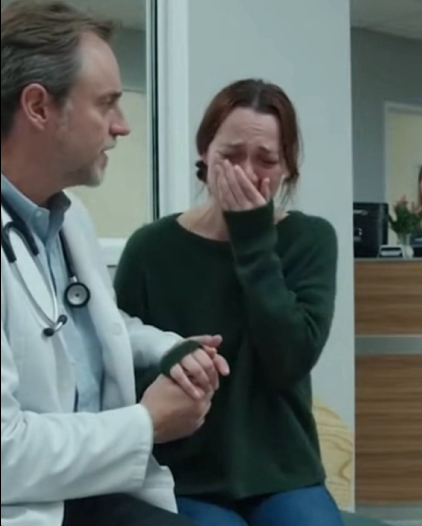
Dr. Mark Sullivan walked into the waiting room, his face a mask of practiced sympathy.
I stood up, heart pounding. “Is Bailey okay?”
He sat down beside me, taking my hand. The gesture felt rehearsed.
“I wish I had better news. The tests came back. It’s cancer. Lymphoma. Very aggressive.”
My world stopped. “Cancer? But she’s only four. She’s been fine—”
“That’s how it happens sometimes. Fast. Brutal.” He squeezed my hand. “I recommend we put her to sleep today. Before she suffers.”
“Today?” I pulled my hand away. “Can’t we try treatment? Chemo? Something?”
“Mrs. Patterson, I’ve been doing this twenty years. When it’s this advanced, treatment only prolongs the pain.” His voice was gentle. Final. “The kindest thing we can do is let her go peacefully.”
Through the window behind him, I could see into the examination room.
Bailey was jumping. Playing with a toy. Her tail wagging like crazy.
“She doesn’t look sick,” I said slowly.
“The medication is helping temporarily. But it won’t last.” He stood. “I can schedule the euthanasia for this afternoon. Two o’clock?”
Something felt wrong. But he was the expert. I was just a scared pet owner.
“Can I think about it?”
His smile tightened. “Of course. But every day we wait is another day she might collapse. Seize. Bleed internally.”
I left without scheduling. Drove straight to another vet clinic.
“I need a second opinion,” I told the receptionist.
Dr. Chen saw us within an hour. She ran blood work. Did an ultrasound. Examined Bailey thoroughly.
“Mrs. Patterson, I don’t see any signs of cancer.”
I stared at her. “What?”
“Your dog is completely healthy. No tumors. No abnormal cells. Nothing.”
I showed her Dr. Sullivan’s report.
She read it, frowning. “These test results… they don’t match your dog’s actual condition. At all.”
“Could he have made a mistake?”
“Maybe. Or…” She hesitated. “Have there been other cases like this at his clinic?”
“I don’t know. Why?”
“Just… get copies of everything. All your records. And maybe report this to the veterinary board.”
I went home shaking. Called Dr. Sullivan’s office.
“I’d like copies of Bailey’s complete medical records.”
“Of course,” the receptionist said. “We can have those ready tomorrow.”
That night, I couldn’t sleep. I kept thinking about Bailey in that exam room. Healthy. Happy.
And Dr. Sullivan’s face. So certain. So sorry.
So fake.
The next morning, a woman called my cell.
“Mrs. Patterson? My name is Rachel Kim. I’m a veterinary assistant at Dr. Sullivan’s clinic.”
“Yes?”
“I need to meet with you. Today. It’s about your dog.”
We met at a coffee shop. Rachel looked exhausted. Scared.
She put a flash drive on the table.
“What is this?” I asked.
“Evidence. I’ve been recording Dr. Sullivan for five weeks.”
My stomach dropped. “Recording what?”
“He’s been diagnosing healthy animals with terminal illnesses. Convincing owners to euthanize. Then selling their organs to research facilities and other vets for transplants.”
I couldn’t breathe. “That’s not possible.”
“It’s been happening for at least two years. Maybe longer.” She pushed the flash drive toward me. “There are videos. Audio recordings. Financial records I copied from his computer.”
“Why are you telling me this?”
“Because yesterday, I watched him tell you your dog had cancer. I saw your face. And I saw Bailey in the back—perfectly healthy, playing.” Her voice broke. “I couldn’t let him kill another one.”
“Another one? How many—”
“At least forty animals. That I know of.”
I thought I might be sick.
“I reported him to the state veterinary board this morning,” Rachel continued. “But they move slow. And he’s already scheduled three euthanasias for this week. I need you to go to the police. Now.”
I grabbed the flash drive. “Come with me.”
The detective listened to our story with increasing horror.
“You have proof of this?”
I handed him the drive.
He plugged it in. Watched the first video.
Dr. Sullivan on camera, talking to an elderly man: “I’m afraid it’s kidney failure. He’s in pain. The humane thing is to let him go today.”
Cut to the dog’s actual test results on screen—completely normal.
Cut to Dr. Sullivan two days later on the phone: “Yeah, I’ve got a healthy kidney from a Golden Retriever. Three years old. $5,000.”
The detective’s jaw clenched. “How many files are on here?”
“Forty-seven cases,” Rachel said. “With evidence.”
He made a call. “I need a warrant. Veterinary clinic. Suspected animal cruelty and fraud.”
They raided Dr. Sullivan’s clinic that afternoon.
He was in the middle of “explaining” to a young couple that their cat had terminal FIV.
The cat was healthy. The test results were fabricated.
Officers walked in with the warrant. Dr. Sullivan’s face went white.
“Dr. Sullivan, you need to come with us.”
“This is absurd. On what grounds?”
“Fraud. Animal cruelty. Theft. We can start there.”
They seized his computers. His files. Found a refrigerator in the back filled with organs in labeled containers.
“Shepherd mix, 2 yrs, both kidneys – $8K”
“Siamese, 4 yrs, heart valve – $3K”
Each one had a date. A name. An owner who’d been lied to.
The story hit the news that night.
My phone exploded. Other pet owners calling, crying, realizing their “sick” animals had been murdered for profit.
Dr. Sullivan’s lawyer released a statement: “My client denies all allegations and looks forward to his day in court.”
That day came six months later.
The prosecution had Rachel’s recordings. Financial records showing $387,000 in organ sales over three years. Testimony from devastated pet owners.
I took the stand.
“He told me my dog would suffer,” I said, voice shaking. “That euthanasia was mercy. She was completely healthy. He was going to kill her and sell her organs.”
The defense tried to discredit Rachel. “You were disgruntled. Recently denied a raise—”
“I was denied a raise because I questioned why so many healthy animals were being euthanized,” Rachel shot back. “He knew I was getting suspicious.”
The jury saw the videos. Heard the recordings. Saw the financial evidence.
They deliberated four hours.
Guilty on all counts.
Dr. Sullivan stood, face crumbling. “I helped animals. I saved lives—”
“You murdered forty-seven healthy pets for money,” the judge interrupted. “You betrayed every person who trusted you with their family members.”
He got eight years in prison. Lost his veterinary license permanently. Banned from owning or working with animals ever again.
And he had to pay restitution to every family. $50,000 each for emotional damages.
He didn’t have that kind of money. His house was seized. His cars. Everything.
Rachel testified at the sentencing. “I stayed quiet too long. I thought I’d lose my job, my license. I was scared. But watching Mrs. Patterson’s face when he told her to kill her dog…” She looked at me. “I couldn’t anymore.”
After the trial, I found her in the hallway.
“Thank you,” I said. “You saved Bailey’s life.”
“I just wish I’d done it sooner. For the others.”
She was hired by Dr. Chen’s clinic. Promoted to senior technician.
“We need people with integrity,” Dr. Chen told her. “People who’ll speak up.”
The veterinary board implemented new protocols. Mandatory second opinions for terminal diagnoses. Random audits. Stricter oversight.
They called it “Bailey’s Law.”
My dog is seven now. Healthy. Happy. Has no idea she almost died for a lie.
But I know.
Every time I take her to the vet—Dr. Chen now—I remember.
How close I came to trusting the wrong person.
How one assistant’s courage saved her life.
And how forty-seven families never got their pets back.
Dr. Sullivan is scheduled for release in two years. Good behavior.
I’ve already written to the parole board.
“He showed no remorse. Only anger at being caught. He shouldn’t be released early.”
Twenty-three other families wrote similar letters.
The vet tech community blacklisted him. Even if his ban is lifted, no one will hire him.
He destroyed his own life through greed.
And forty-seven families will never forgive him.
But Bailey’s alive.
And Rachel’s still saving animals.
And that has to be enough.