The Inheritance She Never Owed
Margaret Foster sat in her lawyer’s office, pen in hand.
“Are you absolutely certain about this, Mrs. Foster?”
She nodded. “Completely certain.”
“Your children won’t be happy.”
“My children have already received more than most people get in a lifetime.”
The lawyer adjusted his glasses. “Just so I’m clear—you’re leaving your entire estate, approximately $4.3 million, to the Foster Foundation for Underprivileged Children?”
“Yes. Every penny.”
“And to David and Linda?”
“Nothing.”
The lawyer made a note. “I have to ask—is there a particular reason?”
Margaret smiled sadly. “Because I already gave them everything that mattered. And they never appreciated any of it.”
She signed the document.
That was three weeks ago.
Today, David had found out.
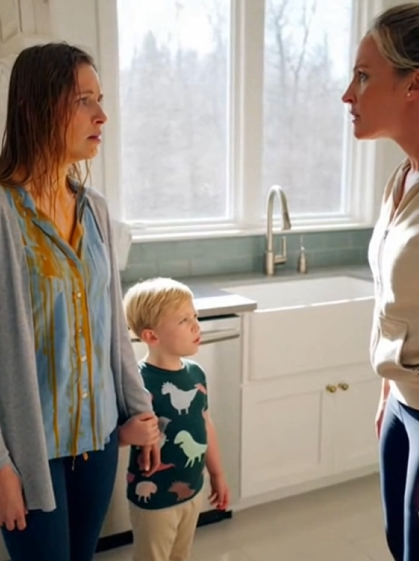
Margaret was making tea when he burst through the front door.
No knock. No greeting.
Just rage.
“WHAT THE HELL IS THIS?!”
He threw papers onto her kitchen table.
Margaret turned, heart sinking. “David, how did you—”
“How did I get your will? Linda works at Morrison & Associates, remember? She saw it being processed.”
Of course. Linda’s law firm handled estate planning.
Margaret should’ve known.
“We need to talk about this calmly—”
“CALMLY?!” David’s face was red. “You’re giving away MY money!”
“It’s not your money, David. It’s mine.”
“I’m your SON! That money should go to FAMILY!”
Margaret set down her teacup with shaking hands. “I’ve already given you and Linda so much—”
“So much? You mean doing your JOB as a parent?”
The words hit like a slap.
“David, I paid for your entire education. Your wedding. Your first house down payment. I gave you $50,000 when your business almost failed—”
“That was a LOAN!”
“You never paid it back.”
“Because you’re my MOTHER! You’re supposed to help!”
Margaret felt tears building. “I did help. For forty years, I helped. I sacrificed everything—”
“And now you’re throwing it all away on STRANGERS?!”
The front door opened again.
Linda walked in, designer purse, expensive heels.
“Mom.” Her voice was ice. “We need to fix this.”
“There’s nothing to fix, Linda.”
“You’re clearly not thinking straight. Maybe early dementia—”
“I’m not DEMENTED!” Margaret’s voice cracked. “I’m making a choice!”
David stepped closer, towering over her. “You’re making the WRONG choice.”
“It’s MY money!”
“It’s FAMILY money! Dad built that wealth!”
“Your father died thirty years ago with $200,000 in life insurance. I turned it into $4.3 million through careful investing and forty years of work!”
Linda scoffed. “So you think you deserve credit?”
“I think I deserve the right to decide what happens to MY estate!”
David grabbed the will, waving it in her face. “This is insane! You’re going to let some random kids benefit while your OWN children get nothing?!”
“You’re not children anymore. You’re forty-two and thirty-nine. You have careers, homes, families—”
“We have EXPENSES!” Linda snapped. “Do you know how much private school costs? How much our mortgages are?”
“You chose those expenses. You chose luxury.”
“Because we grew up expecting a certain lifestyle!”
Margaret stared at her daughter. “I grew up in poverty. I wore hand-me-downs. I worked at fourteen. And I turned out fine.”
“Times were different,” David muttered.
“No. Values were different.”
Silence.
Then David’s expression changed. Hardened.
“You’re changing this will.”
“I’m not.”
“Yes, you ARE!”
“David, you can’t force me—”
“The hell I can’t!” He grabbed her arm. “You’re going back to that lawyer right now!”
Margaret tried to pull away. “Let GO of me!”
“Not until you fix this!”
Linda watched, arms crossed, not intervening.
Margaret yanked her arm free. “Get OUT of my house!”
David’s eyes went cold. “Your house? You mean MY inheritance?”
“This house is MINE! I paid for it!”
“With money that should come to US when you die!”
“I’m not dead yet!”
“Well maybe you should HURRY UP!”
The words hung in the air.
Margaret’s blood went cold.
Linda gasped. “David!”
But David was beyond reason. “You selfish, ungrateful old woman. After everything we’ve done for you—”
“Everything YOU’VE done?!” Margaret’s voice shook. “You visit twice a year! You forget my birthday! You only call when you need money!”
“Because you HAVE money! Money that belongs to this FAMILY!”
“I’m donating it to children who actually NEED it!”
“Those kids aren’t YOUR FAMILY!”
“Neither, apparently, are you.”
David’s face twisted.
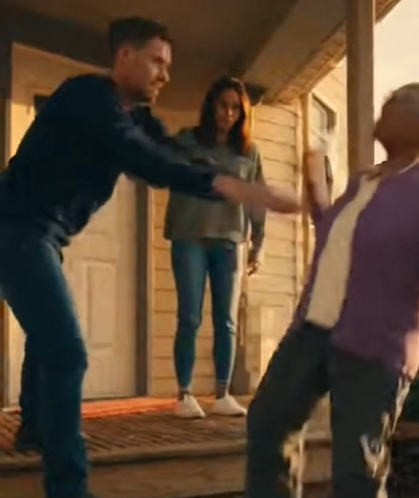
And then his hands shot out.
SHOVE!
Margaret flew backward.
Her seventy-three-year-old body had no chance.
She crashed through the open doorway, tumbling down the three concrete porch steps.
Her hip hit first. Then her shoulder. Then her head smacked against stone.
Pain exploded everywhere.
She couldn’t breathe.
Couldn’t see.
Just pain and shock and the taste of blood.
Through blurred vision, she saw Linda step onto the porch.
Not to help.
To stand over her.
“Just leave, Mother,” Linda said coldly. “You’re not welcome here anymore.”
Margaret lay on the concrete, tears streaming.
Her own children.
Her babies.
David appeared beside Linda, breathing hard.
He looked down at his mother—broken, bleeding, crying.
And he felt nothing.
“Call me when you’re ready to be reasonable,” he said.
Then they both went back inside.
And closed the door.
Margaret didn’t know how long she lay there.
Minutes? Hours?
Everything hurt.
Finally, a voice. “Oh my God! Ma’am?!”
A neighbor. Mrs. Chen from next door.
“I’m calling 911!”
Margaret tried to speak. Couldn’t.
Everything went black.
She woke in a hospital bed.
A doctor stood over her. “Mrs. Foster, can you hear me?”
She nodded weakly.
“You have a fractured hip, a concussion, and three broken ribs. You’re lucky you didn’t break your neck.”
“My… children…”
“They’re not here. Should we call them?”
Margaret closed her eyes. “No.”
“Mrs. Foster, someone pushed you. The neighbor saw. We need to report this.”
“No police.”
“Ma’am—”
“Please. No police.”
The doctor sighed. “I’ll give you some time. But we’re legally required to report elder abuse.”
Elder abuse.
Her own son.
The police came anyway.
They interviewed her. Gently.
Margaret told them everything.
The will. The argument. The shove.
“Do you want to press charges?”
Margaret hesitated.
Then thought about those children. The ones who’d benefit from her foundation.
Kids without parents. Without advocates. Without protection.
“Yes,” she whispered. “I want to press charges.”
David was arrested two days later.
Assault and battery on an elderly person.
A felony.
He was released on bail, furious, still convinced HE was the victim.
Linda hired him the best lawyer money could buy.
Their money. Not Margaret’s.
The trial took six months.
During that time, Margaret recovered. Slowly. Painfully.
And she did something else.
She sold the house.
The one David had called “his inheritance.”
Donated the proceeds—another $800,000—to her foundation.
She moved into a modest senior living community.
Made friends. Took art classes. Volunteered.
And she testified at David’s trial.
Calmly. Clearly.
The jury deliberated for three hours.
Guilty.
David got two years in prison and five years probation.
Linda was charged as an accessory for her failure to help.
She got probation and community service.
Both were permanently estranged from their mother.
FIVE YEARS LATER
The Foster Foundation had grown.
Margaret’s $4.3 million had been invested wisely.
It now provided scholarships to 200 children annually.
Full rides. College. Trade schools. Whatever they needed.
Margaret attended every graduation.
Every single one.
She met the kids. Heard their stories. Saw their gratitude.
And she realized something.
These children—strangers by blood—were more her family than David and Linda had ever been.
They appreciated. They worked hard. They gave back.
One graduate, a young woman named Sophie, approached her after the ceremony.
“Mrs. Foster, I just want to say thank you. My parents died when I was twelve. I had nothing. Your foundation gave me everything.”
Margaret hugged her. “You earned it, sweetheart.”
“I’m going to medical school. And someday, I’m going to donate back. To help other kids like me.”
Margaret cried.
These were her children now.
David was released from prison after eighteen months.
He tried to contact Margaret.
She didn’t respond.
He sent letters. Apologies. Promises to change.
She burned them.
Linda sent a card on Margaret’s eightieth birthday.
“I’m sorry for everything. Can we talk?”
Margaret didn’t reply.
Some bridges, once burned, can’t be rebuilt.
Margaret died peacefully at eighty-six.
Surrounded by staff from her foundation.
By scholarship recipients who’d become doctors, teachers, engineers.
By people who loved her not for her money.
But for her heart.
David and Linda weren’t notified until after the funeral.
By then, she’d been cremated.
Her ashes scattered in the garden of the foundation’s headquarters.
A plaque read: “Margaret Foster. She gave everything to those who had nothing.”
David stood in front of it, crying.
Too late for regret.
Too late for redemption.
He’d chosen money over love.
And he’d lost both.
Linda stood beside him, equally broken.
“We should’ve just been grateful,” she whispered.
David said nothing.
Because there was nothing left to say.
The Foster Foundation continues today.
It’s helped over 2,000 children.
Margaret’s $4.3 million has grown to $12 million through donations and investments.
Every scholarship recipient knows her story.
About the mother who chose strangers over ungrateful children.
About the woman who understood that family isn’t blood.
It’s love. Respect. Gratitude.
And about the son who destroyed everything by pushing his mother down the stairs.
For money he never deserved.
And an inheritance he never earned.
The silence that followed Margaret’s fall had been deafening.
But what came next changed everything.
Justice. Legacy. Purpose.
And a lesson that entitlement destroys.
But generosity lives forever.