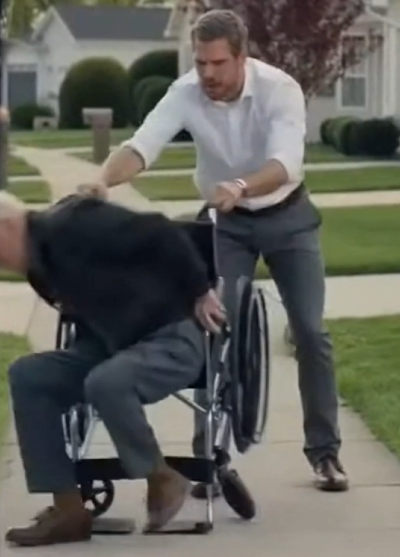
The morning Rosa Delgado was fired, she made Mason Calloway’s eggs the way he liked them.
She did it on instinct, out of the rhythm of three years — a little runny, a little salty, soft scrambled in butter with a corner of toast cut into a triangle because Mason had decided at age three that triangle toast was scientifically superior to square toast and had never revisited the position.
She set the plate in front of him.
He picked up his fork.
He looked at her. “You okay, Rosa? You have your serious face.”
“I’m fine, baby,” she said. “Eat your eggs.”
He ate his eggs.
She stood at the sink and washed the pan, and she thought about the conversation Mr. Calloway had asked her to come to his office for at ten a.m., and she tried not to think too hard about what it was going to be about.
She had a feeling. She’d had it since the previous Tuesday — since she’d heard his key in the front door in the middle of the afternoon, earlier than expected, and had been lying on the living room floor with Mason doing something that involved a lot of foam blocks and apparently the complete geopolitical structure of a dinosaur civilization. She’d looked up and seen Daniel Calloway standing in the doorway, briefcase in hand, watching them.
His expression had been complex. Not angry. Something more complicated than angry.
She’d started to sit up. “Mr. Calloway — I didn’t hear—”
“It’s fine,” he’d said. “Looks like fun.”
He’d walked past them toward the kitchen.
The energy in the room had changed. Mason had noticed. He’d looked at the doorway where his father had been, then back at Rosa.
“He’s in a bad mood,” he whispered.
“Don’t say that,” she whispered back.
“I can tell,” he said matter-of-factly. “His shoulders do the thing.”
She’d told him that was enough dinosaur politics for one day and sent him upstairs to wash up for dinner.
That was Tuesday.
By Thursday, she had the feeling.
By Monday, the feeling was a fact.
Daniel Calloway’s office was actually a study — dark wood, built-in shelves, a desk that had been his father’s. Rosa had dusted it hundreds of times. She knew every object on it: the lacquered pen set, the photo from their Yellowstone trip four years ago, the small framed drawing Mason had made of the family that included, Rosa had always noticed without commenting, a small figure labeled ROSA in the top right corner.
She sat in the chair across from his desk.
He was formal about it. She had to give him that — he didn’t pretend it wasn’t happening or soften it with so much padding that the real thing got lost. He said she’d been excellent, that they appreciated everything she’d given to the family, and that they’d decided the arrangement had become, in his words, “too personal.”
She kept her hands folded in her lap.
“I want to be clear that this isn’t about your work,” he said. “It’s about — about what’s appropriate. For our family.”
“I understand,” she said.
She understood. She understood perfectly.
He walked her to the door. He handed her a check — generous, she noticed, more than the legal minimum. Guilt, probably. Or fairness. Maybe both.
She picked up her bag from the front hall.
Mason was at school. That was the one mercy.
She walked to her car. She put her bag in the passenger seat. She sat behind the wheel.
She did not allow herself to look back at the house.
She drove.
Mason came home at three-fifteen to a house that was Rosa-shaped in all the wrong ways.
The bag hooks by the door had the right bags on them. The kitchen smelled the right way. Everything was in order.
But she wasn’t there.
He stood in the kitchen doorway and did a full visual sweep, the way he did every day — not consciously looking, just checking, the unconscious orientation toward the person who organized his world.
“Where’s Rosa?” he said.
Christine was at the kitchen island. She set down her coffee mug very carefully.
She’d prepared for this question. She’d planned her words, kept them simple, kept them honest, kept them gentle.
“Rosa is not going to be working here anymore,” she said.
The silence was very specific. It had texture and weight.
“How come?” Mason said.
“Dad and I decided it was time for a change.”
He looked at her. She could see him processing — running it through whatever five-year-old system he had for events that were too large and too wrong to be absorbed quickly.
“Did she want to leave?” he asked.
Christine hesitated one beat too long.
“Mason—”
“Did she want to leave?”
“That’s — it’s complicated, baby.”
He looked at her for a long moment. Then he nodded once — a single, adult, terrible nod, the nod of someone filing a verdict — and walked to the pantry, opened it, stared at the shelves, and closed it without taking anything.
He went upstairs.
Christine sat back down and looked at the wall for a long time.
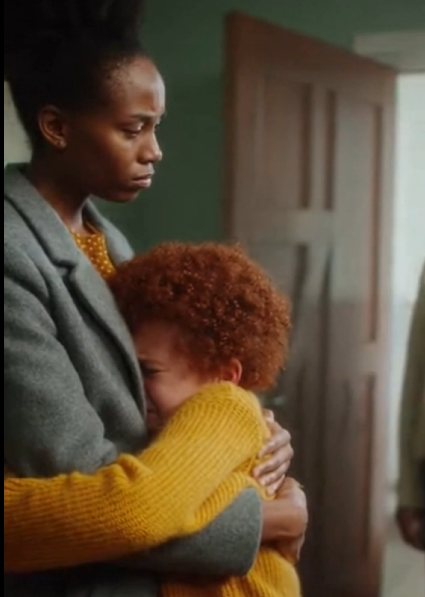
Day one was shock. Day two was adjustment. Day three was the beginning of something that Christine would later describe, to anyone who asked, as “watching my son lose altitude.”
It wasn’t dramatic. It wasn’t tantrums or screaming or the kind of grief that’s easy to respond to because it announces itself clearly.
It was quieter and more persistent.
The cereal bowl pushed away. The craft bin unopened. The chatter that had previously constituted the ambient soundtrack of their mornings — a running commentary on everything Mason saw, thought, felt, and imagined, delivered at full volume with total unselfconsciousness — went silent.
He answered questions. He said please and thank you. He did his homework.
He just stopped being Mason.
Christine tried. She tried the eggs, which came out wrong in a way she couldn’t identify. She tried the afternoon projects, but she didn’t know the system Rosa had — the laminated cards with the instructions, the sorted supplies, the particular enthusiasm that made assembling a paper-towel-roll rocket feel like an actual scientific endeavor rather than arts and crafts.
She tried reading to him at night. He was patient with her.
The patience was the worst part.
“He’s fine,” Daniel said on day four. “He’s fine, he’ll adjust, give it time.”
Christine didn’t answer.
On day five she put Rosa’s number in her phone. She didn’t call it.
On day six she found Mason’s jar on the nightstand while she was straightening his room.
She picked it up. Looked at it. A piece of paper with his name in Rosa’s handwriting. A dinosaur sticker. A foam star from a craft project. A rubber band.
She set it down exactly where she’d found it.
She left the room. She went to the bathroom and sat on the edge of the tub and breathed carefully until she felt steadier.
Day seven: school called.
His teacher, a young woman named Ms. Paulson, used the word “withdrawn” and then the phrase “not his usual self” and then, carefully, “I just wanted to flag it.”
Christine said they were aware. She thanked her.
She sat with the phone in her hand for a long time after.
She called Natalie, her sister, who came over that afternoon with a bottle of wine and the kind of frank love that siblings are specifically evolved to provide.
“He’s heartbroken,” Natalie said, watching Mason through the back window. He was sitting on the porch steps staring at the yard.
“He’s five,” Christine said.
“Hearts don’t come with age minimums,” Natalie said.
“Daniel thought she was—”
“I know what Daniel thought.” Natalie looked at her. “What do you think?”
Christine stared at the wine in her glass.
“I think I let him decide because I was tired and it was easier,” she said. “I think I told myself I agreed with him when actually I just didn’t want to fight about it.”
“Okay,” Natalie said. “So.”
“So.”
“So call her.”
Christine looked at her phone. Rosa’s number, already saved.
“Daniel has to be part of it,” she said. “He has to make the call himself.”
Natalie nodded. “Yeah,” she said. “He does.”
The conversation with Daniel happened that night, after Mason was in bed.
It was not the worst conversation they’d ever had. It was also not comfortable. Christine had learned, over twelve years of marriage, that the most important conversations were rarely comfortable, and that the discomfort was usually a sign you were in the right territory.
“I felt replaced,” Daniel said. He said it simply, without defense, which Christine recognized as a significant act for him. “I came home and they were on the floor together and I felt like an outsider in my own house. And that’s—” He stopped. “That’s my issue. That’s not her fault.”
“No,” Christine said. “It’s not.”
“She was doing exactly what we were paying her to do, which was to be present with him when we weren’t.”
“Yes.”
“And I fired her for it.”
“Yes.”
He was quiet.
“What do I say to her?” he asked.
“The truth,” Christine said. “Exactly what you just said to me.”
The call happened the following evening.
Christine sat at the kitchen table with her phone and texted Rosa first: Can we call you? Both of us. If you’re willing.
The response came in under two minutes: Okay.
Daniel sat across from Christine. He picked up the phone when she held it toward him. He dialed.
Rosa answered on the second ring.
“Rosa,” Daniel said. “I—” He stopped. Started again. “I owe you an apology. And I’d rather give you the whole one than the easy version, if that’s okay.”
A pause on the line. “Okay,” Rosa said.
He talked for four minutes. Christine listened to him say the things he’d said to her the night before, but more precisely this time, more carefully, without the protective layers. He described his own jealousy with the discomfort of someone handling something sharp. He said she’d done nothing wrong. He said Mason was struggling. He said he understood if she’d moved on and had no interest in returning.
At the end, he passed the phone to Christine.
“He misses you,” Christine said. “He’s keeping things in a jar.”
A long silence on the line.
“A jar?” Rosa said.
“Little things. Things that remind him of you.” A pause. “The origami ring you made him. He sleeps with his hand curled up so he doesn’t flatten it.”
The silence on the other end had a texture to it.
“Can I call you back?” Rosa said. Her voice was steady but not quite even.
“Of course,” Christine said. “Take whatever time you need.”
The call came at ten seventeen that night.
“I’d like to come back,” Rosa said. “But I need things to be different.”
“Tell me what you need,” Christine said.
Rosa told her. She said it clearly, without apology: she needed to be treated as a real member of the household, not a service. She needed her judgment to be trusted. She needed to know that when she built something with Mason — a routine, a trust, a language between them — it wasn’t going to be dismantled on a bad Tuesday because someone felt uncomfortable.
“I understand,” Christine said.
“I need Mr. Calloway to understand,” Rosa said. “Not just you.”
Daniel, who had been sitting across the table listening, reached over and pressed the speaker button on the phone.
“I understand,” he said. “I’m sorry it took me this long to get there.”
Another pause.
“I’ll come Tuesday,” Rosa said.
The night before Rosa came back, Christine sat on the edge of Mason’s bed after he’d fallen asleep and looked at the jar on his nightstand.
It was up to her chin now — full of small, careful preservations. She could see, in the dim light from the hallway, the corner of a piece of paper, the edge of a sticker, the coil of a rubber band.
She picked the jar up gently.
She turned it in her hands.
Three years of someone being present. Consistent. Paying attention. Three years of a person showing up, day after day, for the ordinary unremarkable miracle of being with her son.
She’d watched it from a distance and been grateful for it without really understanding what it was.
She understood it now.
She set the jar back down.
She pulled Mason’s blanket up.
She kissed his forehead.
“Tomorrow,” she whispered.
Tuesday morning came gray and cold, the kind of November morning that makes the indoors feel specifically precious.
Mason came downstairs at seven, earlier than usual. He was in his dinosaur pajamas and one sock — the left one, which Christine had learned was always the one that stayed on, the right one always migrating off overnight. He had Gerald the elephant under one arm.
He walked into the kitchen.
He looked at Christine.
“Morning,” she said. Carefully neutral.
“Morning,” he said.
He climbed onto his stool. He looked at the table. He looked at the window.
He didn’t ask for anything. He was quiet in a way that was different from the eleven days of quiet — not the heavy, closed quiet of grief, but something lighter. Listening.
Christine made eggs. She did her best.
She set the plate in front of him.
He picked up his fork. Took a bite.
He looked at the eggs.
“They’re a little different,” he said.
“I know,” she said. “I’m still learning.”
He nodded. He ate another bite.
“Mom?” he said.
“Yeah, bug?”
“Something feels different today.”
She looked at him. His eyes, very large and very brown, were fixed on hers.
“Does it?” she said.
“In my stomach,” he said. “Like before my birthday.”
She turned back to the counter before he could read her face.
“Maybe something good is coming,” she said.
He was quiet for a moment. Then, softly: “Maybe.”
At nine forty-seven, the Civic turned into the Calloway driveway.
Mason heard it.
He was off his stool before Christine could say a word — before she could prepare him, before she could build a bridge between the past eleven days and this moment. He just heard the particular, slightly rough idle of Rosa’s engine and his body understood.
He hit the kitchen doorway at a run.
Daniel appeared from the hallway, freshly showered, dressed down — jeans, no tie. He looked at Christine.
“Is she—”
“Yes,” Christine said.
He nodded. Something in his face opened slightly.
Mason was in the hallway. They could hear him — the slapping of his one sock on the hardwood, the squeak as he hit the rug, the creak of the third step from the bottom.
Then the front door.
The sound of it opening.
And then — a sound that Christine would carry with her for the rest of her life — her son’s voice, breaking open with relief, saying “ROSA—” in a voice that was half-sob and half-shout and entirely the most honest sound she’d ever heard—
Rosa had gotten out of the car and was halfway up the front path when the door flew open.
She stopped.
Mason stood in the doorway. One sock. Dinosaur pajamas. Gerald the elephant dropped on the front step, forgotten in the threshold between inside and outside.
He was crying already — the immediate, uncomplicated tears of a child who has stopped managing his feelings and simply allowed them to happen.
He stared at her.
She looked at him — at the jar-keeping, ant-drawing, elephant-telling, origami-ring-protecting small person standing in the doorway.
She had maintained professional distance for twenty-two days. She had been appropriate and calibrated and carefully composed.
“Mason,” she said.
He launched.
There was no other word for it — he launched himself off the front step and hit her around the middle with his full five-year-old weight and momentum, and she caught him, staggering back half a step, and then he was in her arms and his face was pressed into her shoulder and he was crying fully now, no longer managing any of it.
“I’m not letting go,” he said into her shoulder. His voice was muffled and fierce. “I’m not. Don’t ask me to.”
She held him. She held him the way you hold something you thought was gone.
“Okay,” she said. Her voice was steady. She was a professional. “Okay, mi pequeño guerrero.”
He made a sound at those words — a sound like something snapping back into place.
“You remembered,” he said.
“I always remember,” she said.
Daniel and Christine were standing in the doorway.
Daniel had his arm around Christine. She was pressed into his side, watching her son, and her face was doing something complicated and necessary and long overdue.
Rosa looked at them over Mason’s head.
Daniel Calloway, for the first time in the memory of this household, looked uncomfortable in the best possible way — like a person who had done a hard thing and was learning to live in the aftermath of it.
He stepped forward.
“Rosa,” he said.
She waited.
“Welcome back,” he said. “I mean it. Both things.”
She nodded once. “Thank you, Mr. Calloway.”
“Daniel,” he said. “You’ve worked here three years. It’s Daniel.”
A beat.
“Daniel,” she said.
Christine made a sound that was probably supposed to be a laugh and came out as something wetter.
“Can we go inside?” she said. “I’ll make coffee. Actual coffee, not whatever that was I’ve been making.”
“Your coffee is fine,” Rosa said.
“It’s not,” Mason said into her shoulder. “It’s not fine at all.”
Christine laughed — a real laugh, sharp and surprised and enormously relieved.
They went inside.
Rosa set Mason down in the kitchen, and he immediately took her hand and started talking — the full-volume, stream-of-consciousness, missing-nothing monologue that was his natural state, that Christine hadn’t heard in eleven days, that filled the kitchen like the return of weather after a drought.
He told Rosa about the ants in the backyard. He told her about Ms. Paulson’s new erasers that smelled like fruit. He told her about the volcano he wanted to make that was bigger than the last one. He told her about Gerald the elephant and Gerald the refrigerator and how he’d said good morning to the refrigerator every day even though it was different without her there because she was the one who’d taught him to do it.
He told her about the jar.
He went upstairs, still talking, and came back with it.
He put it on the table in front of her.
Rosa looked at it.
He had arranged the contents by size, Christine noticed. Smallest at the bottom, largest at the top. Precise, careful, systematic.
“I kept them,” he said. “So I wouldn’t forget the shape of you.”
The kitchen was quiet.
Rosa looked at the jar for a long time.
Then she looked at Mason.
“I kept something too,” she said.
She reached into her bag and produced a small, folded piece of paper — the Polaroid from his birthday, slightly bent at one corner, carried in her pocket for twenty-two days.
She put it on the table next to the jar.
Mason looked at it. At himself and Rosa and the sideways paper crown and the stolen frosting and the enormous, forty-percent grin.
“I look funny,” he said.
“You look happy,” she said.
He picked it up. Turned it over. Put it back down.
He looked at her. “Will you stay?”
“Yes,” she said. “I’m staying.”
“For a long time?”
“For a long time.”
He nodded. This was the transaction he required. Once it was completed, he turned immediately back to the volcano plans, and whether they could make the lava a different color this time, and whether Rosa thought the kitchen could survive if they used red food coloring instead of orange.
Christine watched Rosa absorb herself back into the ordinary life of this kitchen — watched her lean over the table to look at the blueprint Mason was sketching on a paper towel, watched her ask a clarifying question about lava viscosity, watched her become, between one breath and the next, the person she’d always been here.
Paige appeared in the kitchen doorway. Fourteen, supposedly uninvested.
She looked at Rosa.
Rosa looked at her.
“Hi,” Paige said.
“Hi, Paige.”
“You should know,” Paige said, “that the coffee situation has been critical. I’ve been suffering.”
“I heard,” Rosa said.
“I’ll make coffee,” Daniel said.
Three people turned to look at him simultaneously.
“I can make coffee,” he said, slightly defensive.
“Nobody said you couldn’t,” Christine said.
“Your face said it,” he said.
Mason looked up from his paper towel blueprint. “Gerald can help,” he offered.
“Gerald the refrigerator,” Rosa said, without missing a beat, “does not make coffee. We’ve had that conversation.”
“He could try,” Mason said.
“He’s a refrigerator, Mason.”
“He’s family,” Mason said. “Family tries.”
The kitchen held that sentence for a moment.
Then Rosa laughed — and it was the real laugh, the one that came from somewhere unguarded and unmanaged, the one that the Calloway kitchen had been missing for eleven days — and the sound of it moved through the room like weather, like warmth, like something returning to its right place.
Daniel stood at the coffee machine and watched his family.
His son, bent over a paper towel, talking rapidly to the person he loved most in the world.
His wife, leaning against the counter, shoulders dropped, face open.
His daughter in the doorway, pretending she wasn’t smiling.
And Rosa — Rosa, who had every reason not to come back, who had come back anyway, who had made this house a home in the thousand ordinary ways that mattered — Rosa at the center of it, where she should have been all along.
He pressed the button on the coffee machine.
He said, quietly, to no one in particular, “I’m glad you’re here.”
Rosa heard it. She didn’t look up from the blueprint.
“Me too,” she said.
Later, when Mason was finally in bed — full of pasta, vibrating with residual excitement, the jar on his nightstand now joined by the Polaroid in a small frame Christine had found in the craft drawer — Rosa sat with Christine and Daniel at the kitchen table.
No agenda. Just coffee and the end of a long day.
“I want to say something,” Daniel said.
They waited.
“I want to say it properly.” He looked at his coffee mug. “I made a decision based on something that was my problem, not yours. I called it professional and appropriate and it wasn’t either of those things. It was — small. And it cost Mason something real, and it cost you something real, and I’m not going to pretend that’s okay just because we moved past it.”
Rosa listened.
“I’m sorry,” he said. “Properly.”
The kitchen clock ticked.
“I appreciate that,” Rosa said. “Properly.”
Christine exhaled.
“Right,” she said. “Good. Okay.” She stood up, picking up her mug. “I’m going to check on the kids and then I’m going to sleep for approximately eleven hours.”
“You should,” Rosa said.
“You’re already on the schedule,” Christine said. “Wednesday, Thursday, Friday, Monday. Unless you want to change anything.”
“That’s fine.”
“And Rosa.” Christine paused in the doorway. “Whatever that jar was — whatever he was building in there — that belongs to you. Both of you. It’s yours.”
Rosa looked at the table.
“Thank you,” she said.
On Wednesday morning, the Calloway house woke up differently.
Not dramatically. Not with brass fanfare or visible transformation.
Just — differently.
The sounds were right again. Water running in the kitchen at seven. A cabinet closing. Something hummed under someone’s breath.
The smells were right. Butter in the pan. Coffee — real coffee, not the thin, anxious coffee of the past eleven days, but the proper kind.
Mason came down the stairs at seven-oh-three in his dinosaur pajamas and one sock and stood in the kitchen doorway.
He did his sweep.
He found what he was looking for.
Rosa, in her pale blue apron, at the stove.
He walked to his stool and climbed up.
She turned around and put a plate in front of him.
Eggs. A little runny. A little salty. Triangle toast.
He picked up his fork.
He took a bite.
He looked at her.
“Perfect,” he said.
She smiled. She turned back to the stove.
“Good morning, Gerald,” Mason said to the refrigerator.
The refrigerator hummed.
“He says good morning back,” Rosa said.
“I know,” said Mason. “He missed me too.”
End.