The phone shattered against the marble wall.
“You’re nothing here,” Richard Jr. hissed, his designer suit perfectly pressed. “Just the help.”
I didn’t flinch. My hand slipped into my pocket, fingers wrapping around my backup phone.
“Get out,” his sister Patricia added, her diamond bracelet catching the light. “Dad’s resting.”
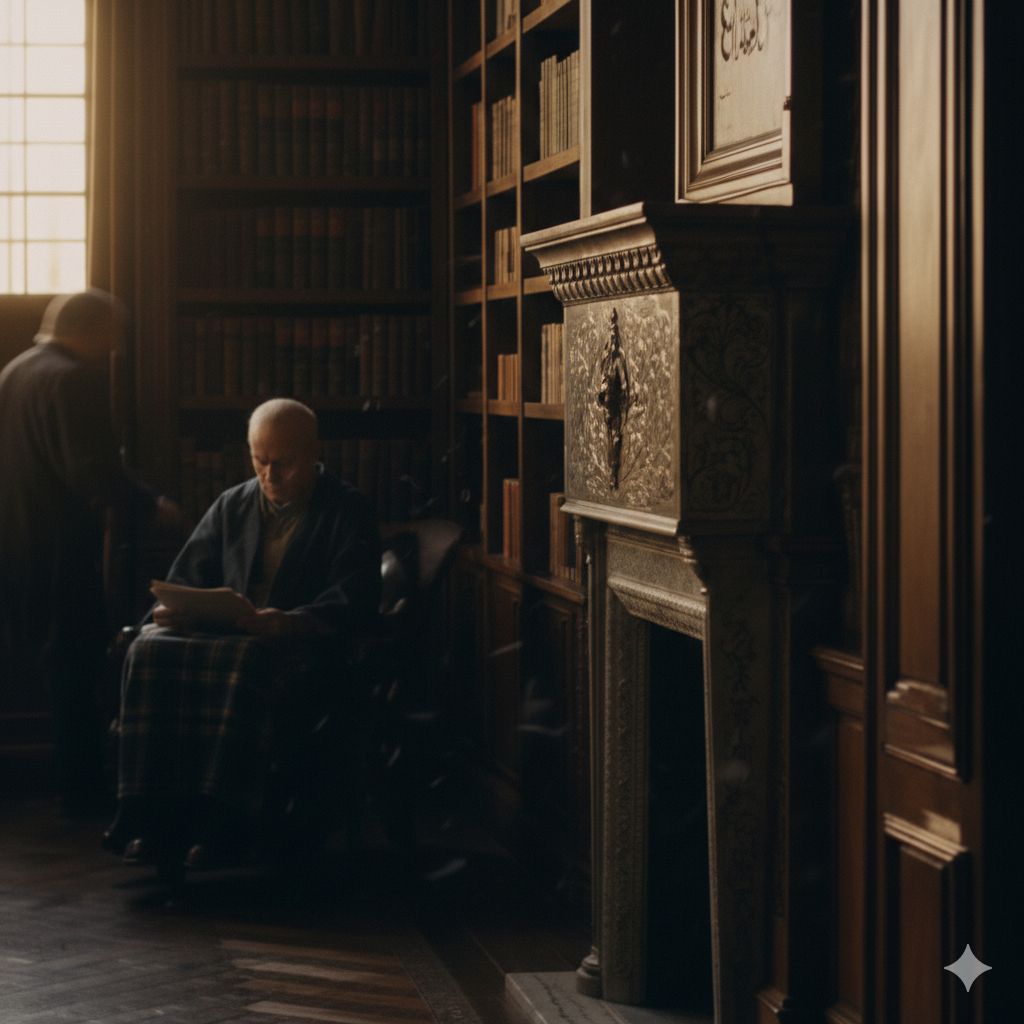
I looked past them. Through the doorway, Mr. Harrison sat in his wheelchair, eyes sharp despite his frail body.
He’d heard everything.
Three months earlier, I’d arrived at the Harrison estate with one suitcase and a nursing degree. The agency warned me: “The family is… difficult.”
They meant absent.
Mr. Harrison—Thomas, he insisted I call him—spent his days alone in a mansion built for twenty. His children lived across the country. They called twice a year.
“They’re busy,” he’d say, staring at his phone.
I learned his routines. Coffee at six. Physical therapy at nine. Lunch on the terrace when weather permitted.
We talked. Really talked.
He told me about building his company from nothing. About his late wife, Margaret. About the grandchildren who didn’t know his voice.
“I gave them everything,” he said one afternoon, voice breaking. “I thought that was enough.”
It wasn’t.
Then the diagnosis came. Stage four pancreatic cancer. Six months, maybe less.
Suddenly, his phone rang constantly.
“Dad, we’re coming to visit,” Richard Jr. said during one call. Thomas’s hands shook as he held the phone.
“Really?”
“Of course. Family should be together.”
Thomas smiled for the first time in weeks. “I’d like that.”
They arrived three days later. Mercedes. Louis Vuitton luggage. Fake smiles.
Patricia hugged him carefully, as if he might break. “You look good, Dad.”
He didn’t. He’d lost forty pounds.
“We’re here now,” Richard Jr. said, patting his shoulder. “Don’t worry about anything.”
That night, I heard them in the study.
“How long did the doctor say?” Patricia’s voice drifted through the crack in the door.
“Six months. Maybe less.”
“And the will?”
“Unchanged, according to his lawyer. Split three ways, equal shares.”
“What about her?” Patricia’s tone sharpened. “The nurse.”
“She’s nothing. Just hired help. He’ll forget about her after we’re here more.”
My stomach turned.
I pulled out my phone. Pressed record.
“We need to make sure he doesn’t change anything,” Richard Jr. continued. “Stay close. Be attentive. He’s sentimental right now.”
“You think he’d actually leave money to a stranger?”
“He’s weak. Emotional. We can’t risk it.”
I recorded ten minutes. Every word. Every calculated pause.
The next morning, they played their parts perfectly.
Richard Jr. brought breakfast. “I remember you love scrambled eggs, Dad.”
Thomas had been allergic to eggs for fifteen years.
Patricia rearranged his photos, talking about “preserving memories.” She didn’t recognize half the people in them.
Their youngest brother, Michael, scrolled through his phone during physical therapy. “This is great, Dad. Really great.”
Thomas noticed. I saw it in his eyes.
“They came,” he told me later, voice hollow. “That’s what matters.”
“Is it?”
He didn’t answer.
I recorded three more conversations that week.
“Just six months,” Patricia whispered to Richard Jr. in the hallway. “We can manage six months.”
“Did you see the art collection? Worth millions.”
“And the property portfolio. He always was smart with investments.”
“If we’re lucky, it’ll be faster. The doctor said—”
I stopped the recording. I’d heard enough.
Thomas had a bad night. Pain medication barely touched it. He asked for his children.
They were at dinner. Downtown. Reservations at the city’s most expensive restaurant.
“They’ll be back soon,” I lied, holding his hand.
They returned at midnight, drunk and laughing.
The next morning, I found Thomas in his study, staring at a photo of his late wife.
“Margaret would be ashamed of me,” he said.
“Why?”
“I raised them to value things over people. This is my fault.”
“Mr. Harrison—”
“Thomas.”
“Thomas. You gave them opportunities. They chose what to do with them.”
He looked at me. Really looked. “You’ve been here three months. You know my coffee order. My favorite books. The stories about Margaret.”
I waited.
“They don’t know any of that, do they?”
“No, sir.”
He was quiet for a long moment. “I’d like to hear those recordings now.”
My hand shook as I pulled out my phone.
He listened to all of them. Every word. His face remained stone, but his hands gripped the wheelchair arms until his knuckles went white.
When the last recording ended, he looked up. “Thank you for showing me the truth.”
“I’m sorry.”
“Don’t be. I needed to see who they really are.”
He called his lawyer that afternoon. “I’m making changes to my will. Immediately.”
That evening, his children gathered for dinner. Thomas insisted I join them.
“Dad, she’s staff,” Patricia said, uncomfortable.
“She’s family,” Thomas corrected. “More than you’ve been.”
The table went silent.
Richard Jr. forced a smile. “Dad, we’re here now. We’re trying—”
“Trying to wait for me to die so you can sell everything I built?” Thomas’s voice cut like steel. “I heard you.”
Patricia went pale. “What are you talking about?”
Thomas nodded to me. I pulled out my phone.
“How long did the doctor say?” Patricia’s voice filled the dining room.
Their faces drained of color.
I let three recordings play. Every damning word.
“Dad, we can explain—” Michael started.
“Explain what? That you’re vultures circling a dying man? That you came here not out of love, but greed?”
Richard Jr. stood up. “This is ridiculous. You’re going to believe the help over your own children?”
“She’s been more of a daughter in three months than you’ve been in three years.”
Patricia’s voice cracked. “We’re your blood.”
“And you bled me dry emotionally long before cancer did.” Thomas gestured to the door. “Leave. All of you.”
“Dad—”
“NOW!”
They left. Mercedes engines roared to life in the driveway.
Richard Jr. tried to grab my phone on the way out. I stepped back smoothly.
“You manipulative—”
“Careful,” Thomas called out. “That’s all recorded too. Including you assaulting her.”
The door slammed.
Silence filled the mansion.
Thomas looked exhausted. “They’ll contest the will.”
“I know.”
“It’ll get ugly.”
“I know.”
He smiled sadly. “Thank you. For caring when no one else did.”
“That’s what family does.”
Over the next four months, Thomas lived more than he had in years. We traveled—short trips his health allowed. Museums. The ocean. Places Margaret had loved.
His children tried to visit twice. He refused both times.
“Some things can’t be forgiven,” he said.
His lawyer came weekly, documenting everything. The recordings. The timeline. Thomas’s sound mind.
When he passed, it was quiet. Painless. I held his hand.
“Margaret’s waiting,” he whispered. “Finally.”
The funeral was small. A few old friends. His lawyer. Me.
His children showed up anyway, dressed in black, playing grieving.
The will reading was scheduled for the following week.
They arrived confident. Their lawyers flanked them like guards.
Thomas’s lawyer, Mr. Chen, opened the envelope.
“To my children—Richard Jr., Patricia, and Michael—I leave one dollar each.”
Patricia gasped. Richard Jr. jumped up. “That’s not legal!”
“Let me finish,” Mr. Chen continued. “The remainder of my estate, including all properties, investments, and assets, I leave to Sarah Mitchell, who showed me what family truly means in my final months.”
The room exploded.
“She manipulated him!” Patricia screamed.
“We’ll contest this!” Richard Jr. shouted.
Mr. Chen held up his hand. “Mr. Harrison anticipated this. He left extensive documentation. Psychiatric evaluations proving sound mind. Recordings—” He glanced at me. “Many recordings—of your behavior and statements.”
He played one. Richard Jr.’s voice filled the room: “Just six months. We can manage six months.”
“We have seventeen more recordings like this,” Mr. Chen said calmly. “All timestamped. All admissible.”
Their lawyers whispered urgently to them.
“You manipulated a dying man!” Patricia’s face was red.
“I cared for a lonely man who deserved better than children who saw him as a bank account,” I said quietly.
“This isn’t over,” Richard Jr. threatened.
“Actually, it is,” Mr. Chen said. “Contest it if you want. These recordings will become public record. Every word you said about your father. The press would have a field day.”
They left without another word.
The estate was worth twelve million dollars.
I sold the mansion. Too many bad memories.
I used half the money to establish the Margaret Harrison Foundation—scholarships for nursing students and hospice care for families who couldn’t afford private care.
The rest I invested, exactly as Thomas had taught me during our long conversations about his business philosophy.
I kept one thing from the estate: a photo of Thomas and Margaret on their wedding day. It sits on my desk.
Sometimes his children’s social media posts appear in my feed. They’re careful now. Public. Polished.
They never mention their father.
I visit Thomas’s grave every month. I tell him about the foundation. The families we’ve helped. The nurses we’ve trained.
“You did good,” I say, placing fresh flowers. “Better than you knew.”
Six months after his death, I received a letter from one of the families the foundation helped. Their mother had been in hospice, alone, until our program connected her with a caregiver.
“She didn’t die alone,” the daughter wrote. “Because of you, she had someone who cared. Thank you for understanding that everyone deserves dignity at the end.”
I folded the letter carefully.
Thomas had been right. Family isn’t always blood.
Sometimes it’s the person who stays when everyone else leaves.
Sometimes it’s the stranger who sees you as human, not an inheritance.
Richard Jr. tried to sue one more time. The case was dismissed in forty-eight hours. The judge called his claim “frivolous and insulting to his father’s memory.”
I heard he moved to Florida. Patricia to Arizona. Michael to Seattle.
Far from each other. Far from the graves they never visit.
I got a card last Christmas from one of them—Michael. It was brief.
“I’m sorry. You were right. I wish I’d known him like you did.”
I didn’t respond. Some lessons come too late.
But I did add his name to the foundation’s donor list. Anonymous. One thousand dollars.
Not for him. For Thomas.
Because that’s what he would have wanted.
Even after everything, he would have wanted his children to be capable of growth.
I’m not that generous. But I can honor his memory.
The foundation just opened its fifth location. We’ve helped three hundred families. Trained a hundred nurses.
Every single one knows Thomas’s story.
They know why we exist.
They know that at the end, what matters isn’t money or estates or inheritances.
It’s whether someone held your hand.
Whether someone knew your coffee order.
Whether someone stayed.
I stayed.
And Thomas made sure I’d never regret it.